DONATE

CONTACT US

User login

Subscribe to the GEO E-Newsletter

A low-volume email list providing you with our e-newsletter highlighting updates to the GEO website, upcoming events, and more.

Your email address:

SPECIAL: The deal between Mondragon and the United Steelworkers

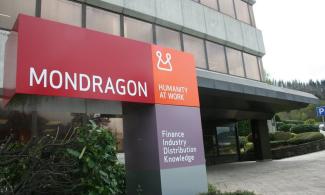
Oct. 27, 2009: The United Steelworkers (USW) and MONDRAGON Internacional, S.A. today announced a framework agreement for collaboration in establishing MONDRAGON cooperatives in the manufacturing sector within the United States and Canada.

Go to GEO's meta-page on this historic agreement

GEO vol. II, #5: Education For Economic Liberation

*For GEO Blog Updates, scroll down below!*

This issue of GEO, the theme of which is Education, is a double issue. Twice as many articles comprise it than we usually publish, and we hope it offers you twice as much value. 

Having an abundance of capitalistic and individual instruction that justifies obscene wealth alongside astronomical lack, clearly we all need information and education on how to create another world where people don't starve, everyone has meaningful work, and the planet's mountains are not cut up, nor its waters polluted, nor land ravaged. Now we need education on alternatives, how to put our ideals in practice, how to stimulate and develop our innate capabilities to expand on what is good and right in the world.  This is essential in the worker cooperative world.  Education is one of the cooperative principles and it is vital to ensure that members of cooperatives and other alternative economic ventures understand what is going on in their cooperatives or collective organizations, and the world. 

Jessie and HendrikIn this issue:

Education is key to our individual growth, our movement, to meeting ever-new challenges.

We hope that this double issue will give you new ideas, more energy for creativity, and spur action that will help us to build a world where people have work that they love, and where they love their work.

Many Thanks

We would also like to thank the contributing writers.  And a special thanks to the photographers (and the writers who contacted them):  Leyla Rosario, Vanessa Bransburg and the unnamed photographers, and others who helped us obtain photos.  This issue of GEO is visually richer because of your work and creativity.

We also thank others who helped in small ways:  Mary Hoyer for her contributions to the resources list, Rubie Coles and Jessica Gordon Nembhard for resource opinions.

We would also like to encourage you to visit us at www.geo.coop and contribute to the online dialogue.

Ajowa Ifateyo


-- Ajowa Nzinga Ifateyo, Issue Coordinator


Permanent link to this issue: http://geo.coop/node/451

Photo above courtesy of Equal Exchange, special thanks to Rodney North.


There's a lot going on this year in solidarity economics - be sure to check out our updated calendar of events.

Get involved with GEO! If you have articles, pictures, or graphics on worker cooperatives and solidarity economics that you'd like to contribute, we want to hear from you.


|

RECENT BLOG POSTS


Celebrate the 16th century roots of the democratic spirit

Listen to this, from the NYTimes:

 "All faiths are welcome to eat a free lunch daily at the Golden Temple, the holiest shrine for Sikhs, in Amritsar, India."

 "Soupy lentils, three and a third tons of them, bubble away in vast cauldrons, stirred by bearded, barefoot men wielding wooden spoons the size of canoe paddles. The pungent, savory bite wafting through the air comes from 1,700 pounds of onions and 132 pounds of garlic, sprinkled with 330 pounds of fiery red chilies.  It is lunchtime at what may be the world’s largest free eatery, the langar, or community kitchen at this city’s glimmering Golden Temple..."

| |

Celebrate the 16th century roots of the democratic spirit

Listen to this, from the NYTimes:

 "All faiths are welcome to eat a free lunch daily at the Golden Temple, the holiest shrine for Sikhs, in Amritsar, India."

 "Soupy lentils, three and a third tons of them, bubble away in vast cauldrons, stirred by bearded, barefoot men wielding wooden spoons the size of canoe paddles. The pungent, savory bite wafting through the air comes from 1,700 pounds of onions and 132 pounds of garlic, sprinkled with 330 pounds of fiery red chilies.  It is lunchtime at what may be the world’s largest free eatery, the langar, or community kitchen at this city’s glimmering Golden Temple..."

| |

The Cooperative Index Tool

In 2005, Johnston Birchall addressed the International Co-operative community. It was the occasion of the the 10th anniversary of the adoption of the Statement on the Co-operative Identity. Prof. Birchall called for the community to "operationalize" the statement. Researchers at St. Mary's University in Halifax have created a tool to help worker co-ops do just that.
| | | |

Alice Walker: "We Cannot Be Ourselves Without Our Land"

The Federation of Southern Cooperatives/Land Assistance Fund on August 19, 2010 honored Alice Walker in Birmingham, AL at its annual dinner attended by more than 400 people.

The Pulitzer Prize-winning author and self-proclaimed "daughter of the rural peasantry" was presented the Estelle Witherspoon Lifetime Achievement award by FSC Executive Director Ralph Paige. The largely black organization of farmer cooperatives works to save and preserve black-owned farmlands. 

| | | |

2010 Conference: EdVision Activates Education

One of the great treats at a national worker coop conference is to learn about the incredible stories that exist. It is easy, sitting in our cooperatives at home, to imagine a world where we are the greatest thing since sliced bread. Then we come to a conference and get our mind blown--not just once, or twice, but several times.

| | | |

Marketing the Coop Advantage in a Worker Coop

How do we create a competitive advantage through the worker coop model when we treat ourselves so much better than the workers in our industry and pay for the higher cost of democracy?
| | | |

The Role of Compassion in Worker Cooperatives

I wasn't quite sure what to expect when I wandered into the meeting room. The description discussed the important role of compassion in dealing with conflicts as opposed to the more common acts of assigning blame.

It was led by Michael Johnson who is part of the Valley Alliance of Worker Cooperatives, GEO and has been living in an intentional community for 30 years. Part of this workshop was based on his real-life experiences in attempting to find more productive methods of resolving conflict.

| | |

Notable Quotes heard at the USFWC conference in Berkeley Aug. 6-8, 2010

 There was so many rich quotes from the national worker cooperative conference that took place in Berkeley last weekend.  Many got lost in my unreadable handwriting.

Here are only a few that I was able to capture: 


hilary abell

"This isn't for everyone.  Co-ops are awesome."

--Hilary Abell, WAGES Executive Director.


patricia Feraud Toxic soil busters

"They say that young people are the future, but they don't treat us like that.  It's like we're a burden. ...We're the leaders of today, not just tomorrow."

| | | | | |

THE EVERGREEN CO-OP MODEL: ECONOMIC DEVELOPMENT WITH A PLAN TO STABILIZE A COMMUNITY

The Evergreen cooperatives in Cleveland, Ohio was the story everyone wanted to hear at the opening session on Saturday Aug. 7, 2010 of the U.S. Federation for Worker Cooperatives conference in Berkeley. 

Several video cameras - including PBS -- were rolling at the front of Krutch Theater as Ted Howard, executive director of The Democracy Collaborative at the University of Maryland, which helped to organize the cooperatives and the strategy along with the late John Logue founder of the Ohio Employee Ownership Center, spoke to an inspired audience of 270 worker cooperators from all over the U.S. and part of Canada.  Also speaking was Medrick Addison, operations manager at Evergreen Cooperative Laundry.


| | | | | | | | | | |

Social Justice Organizers Articulate the Values of the Cooperative Movement

One of the formative questions of the contemporary worker cooperative movement has been that of who the movement is for.  What group of people are included in the movement's organizations, have access the movement's resources, share and shape the movement's values and the campaigns around those values?  


| | | | | | |

Our Calling and Building the Movement

I still have a few more posts on the National Worker Cooperative Conference held in Berkeley last week, but this post isn't about the specific workshops, but a general feeling and vibe that I found at the conference (and at other conferences). The work of building a cooperative society isn't quite like other trade associations or business cultures.

| | | | | |

THE WAGES MODEL OF COOPERATIVE DEVELOPMENT: PROVIDING HOPE AND JOBS AND ECONOMIC SECURITY TO IMMIGRANTS

WAGES is being used as a model by Mexican and Central American immigrants to create their own jobs. Minsun Ji, El Centro Humanitario's executive director in Denver, CO, said when they contacted WAGES to be able to adapt the WAGES strategy locally: "We were so desperate. There were no jobs. We were really, really desperate."
| | | |

We Have To Overcome

At conferences it is always refreshing to meet great and inspiring people who are creating the change the world needs. Listening to the brass band on Saturday night and chanting "no bosses" was invigorating and refreshing. Thank you to all I had the pleasure of meeting.

| |

Conference wrap-up--pleased, uneasy, and inspired

We are not going to become the solution any time soon, but I believe that we have the opportunity to achieve a lot, like laying down a foundational strategy and infrastructure open to diverse approaches for the generation to come.
| | | | | | | | | | |

Deeper Meanings of Cooperation

"How do we refashion ourselves as humans and deal with co-workers who either won't or can't refashion themselves."--Rebecca Kemble, Union Cab of Madison Cooperative and Director, US Federation of Worker Cooperatives
| | | |

Jim Hightower: "We have to get the hogs of out of the creek!"

 Hightower holding up his book

Jim Hightower is a man of very colorful language. 

"We have to get the hogs out of the creek" was Hightower's parting message in his keynote address at the U.S. Federation of Worker Cooperatives on Friday, Aug. 6 at the San Francisco Women's Building. 

I think the hogs was the metaphor for cleaning out those muddying up what democracy is supposed to be. We need a grassroots movement to make change, to clean the creek.

Opening Day: The conference itself is representative of the "surge" in the growth of cooperation

At the opening gathering of the 4th bi-ennial conference of the U.S. Federation of Worker Cooperatives, it was clear that the movement has reached a significant milestone. 

Melissa HooverAudience raising hands to indicate where they're from

First, Executive Director Melissa Hoover announced that PBS (the Public Broadcasting Service) is "following the conference" (note that Twitter reference!) I believe because of the interest in the Evergreen Cooperatives. 

|

Oakland Black Economic History Tour

Call it the Oakland Improvizational Tour.  Or Oakland's Special Synchroncity Tour.  Or the Divine Flow of Oakland Tour.  Whatever you call it, you have got to call it Amazing!!

 On Friday, about 25 of us attending the U.S. Federation of Worker Cooperatives conference were part of an economic development tour of Oakland.  Cooperatives are an economic development tool because they often create services and jobs in areas neglected by traditional so-called development that is done by businesses to make money.  Cooperatives generally fulfills neglected by traditional businesses whose aim is to make profits. 

|

Marketing the Co-operative Advantage

Sunday August 8, 2010 1:25pm USFWC UofC Berkeley, Workshop hosted by John McNamara (Union Cab Cooperative)

Worker co-operatives have a tremendous opportunity to connect with customers who want to purchase from responsible businesses. A great challenge is that worker co-operatives are often dismissed as communist.

Here were a few ideas on how to use marketing to increase sales:

Heading to Headquarters

A brief introduction from John McNamara in preparation for the Worker Cooperative Conference.
| | | |

Toxic Soil Busters

The Toxic Soil Busters are a youth cooperative. These are "youth" in terms of age. They are located in Worchester, MA. They work to clean the soli of their community of the lead paint that was so heavily used by during the industrial age of this area. Since lead poisoning effects children in a more severe manner than adults (although still dangerous), this coop is essentially young people (non-adults) helping to clean the community of lead to help the generation behind them.

| | | | |

Unions and Coops

I wasn't able to sit through the entire presentation, however, I wanted to capture as much as I could of this interesting presentation about the ability of labor unions and worker cooperatives to co-exist and to thrive.

| | | | |

A reflection on GEO's conference blogging experiment

Personally I am finding it very difficult to blog the conference, and I can’t imagine that it is easy for any of the folks who have volunteered to do this.

USFWC 2010 Business Meeting

I am just going to briefly give my impressions and what seemed to me to be the highlights.  This was the first meeting I have attended, so I lack a lot of perspective.
| | | |
Syndicate content

GLEANINGS


Senate committee holds hearing on employee ownership in Montpelier

Vermont Employee Ownership Center reports onthe field hearing of the Senate committee on Health, Education, Kabir, and Pensions (HELP) conerning worker-ownership legislation Sen Bernie Sanders has introduced.   http://www.veoc.org/hearing.html

| | | | | | | |

A Question in Latin America: What Kind of Solidarity Economy?

Miners in Potosí, Bolivia set off sticks of dynamite as cold winter winds zipped through the city, passing street barricades, protests, hunger strikers and an occupied electrical plant. These actions took place place from late July to mid-August against the perceived neglect of the Evo Morales administration toward the impoverished Potosí region. This showdown in Bolivia is similar to conflicts across Latin America between the promises of left-leaning governments, the needs of the people and the finite resources of Pachamama (Mother Earth).
| | | | |

Doing Green Jobs Right

An article in The Nation magazine tells how Boston's Green Justice Coalition is creating "a model to connect the struggle for environmental justice with the fight for living-wage jobs, helping to lay the groundwork for a new generation of community-labor coalitions across the country."
| | | | | | | | | | | | |

2010 Canadian Worker Co-op Federation AGM and Conference open for registration

The 2010 Canadian Worker Co-operative Federation AGM and Conference is being held from Thursday, October 28th to Saturday, October 30th, 2010 in Vancouver, B.C. at the YWCA Hotel.  The theme is "Worker Co-operatives and Sustainable Development."
| | | | | | | | | |

Bread Without Bosses

The mascot of the Alvarado Street Bakery (ASB) is an orange and black cat, with a swinging tail and a sly grin. Perhaps his feisty smile is the result of good working conditions. ASB is the worker owned and run cooperative featured in Michael Moore’s recent film Capitalism: A Love Story as an example of economic democracy. ASB is based in Petaluma, California, but ships nationally through their website. In this interview, Joseph Tuck of ASB tells The Socialist about the company’s practices.

| | | | | | | |

Are worker co-ops making a difference? an interview

From grocery stores and bakeries to bike shops and day care centers, worker-owned cooperatives are gaining popularity across the country. How are they faring in the recession? What solutions do co-ops offer for today’s recession/depression? If they gain even more popularity, could they transform the economy and the way we think it should work?

Guests include Dan Thomases, a founding member of Box Dog Bikes co-op, John Kusakabe of the Arizmendi Bakery co-op, and Hilary Abell of Women's Action to Gain Economic Security (WAGES).


| | | | | | | | | | | | | | |

Bread Without Bosses An Interview with the Alvarado Street Bakery

The mascot of the Alvarado Street Bakery (ASB) is an
orange and black cat, with a swinging tail and a sly
grin. Perhaps his feisty smile is the result of good
working conditions.
| | | | |

Hightower on Unemployment & Cooperatives

A new video interview with Jim Hightower on "unemployment and worker cooperatives."

Watch it here!

| | | | | |

A BRIEF HISTORY OF COOPERATIVES IN THE PITTSBURGH AREA

A BRIEF HISTORY OF COOPERATIVES IN THE PITTSBURGH AREA By John Curl At the time of its incorporation in 1817, Pittsburgh was already a manufacturing center, with a population of around 6,000, supplying the western region with artisanal products almost entirely made by home industry. It had become a manufacturing center during the war of 1812, when the supply of British-made goods have been cut off in the region. In 1817 most manufacturing was still done by independent self-employed artisans using hand tools. But their livelihood was already threatened by the growth of a new system that was making their economy obsolete: factories and wage labor.
| | | | | | | |

An Outline History of Cooperatives in the Bay Area and California

John Curl's history of the Bay Area Cooperative movement is eye-opening. It leaves you amazed that this country is so rich in cooperativism yet we only learn of it through John's heroic efforts. It brings to mind the saying: You need to know where you've been to know where you're going. My hope is that this history further opens up and extends our vision and our work.
| | | | | |
Syndicate content